AutoDevice©
AI that turns plain English into automated iOS and Android tests.
Testing a mobile app usually means writing scripts, renting real devices and fixing tests every time the app changes. AutoDevice replaces that with an AI that runs tests from plain sentences.
The product is very technical. The hard part was making it feel simple to founders and engineering leads, not just QA engineers.
I designed the brand, the website, the web app and the launch kit, end to end.
Project:
AutoDevice
Categories:
Branding, Web & Product Design
Year:
2025 - 2026
Problem
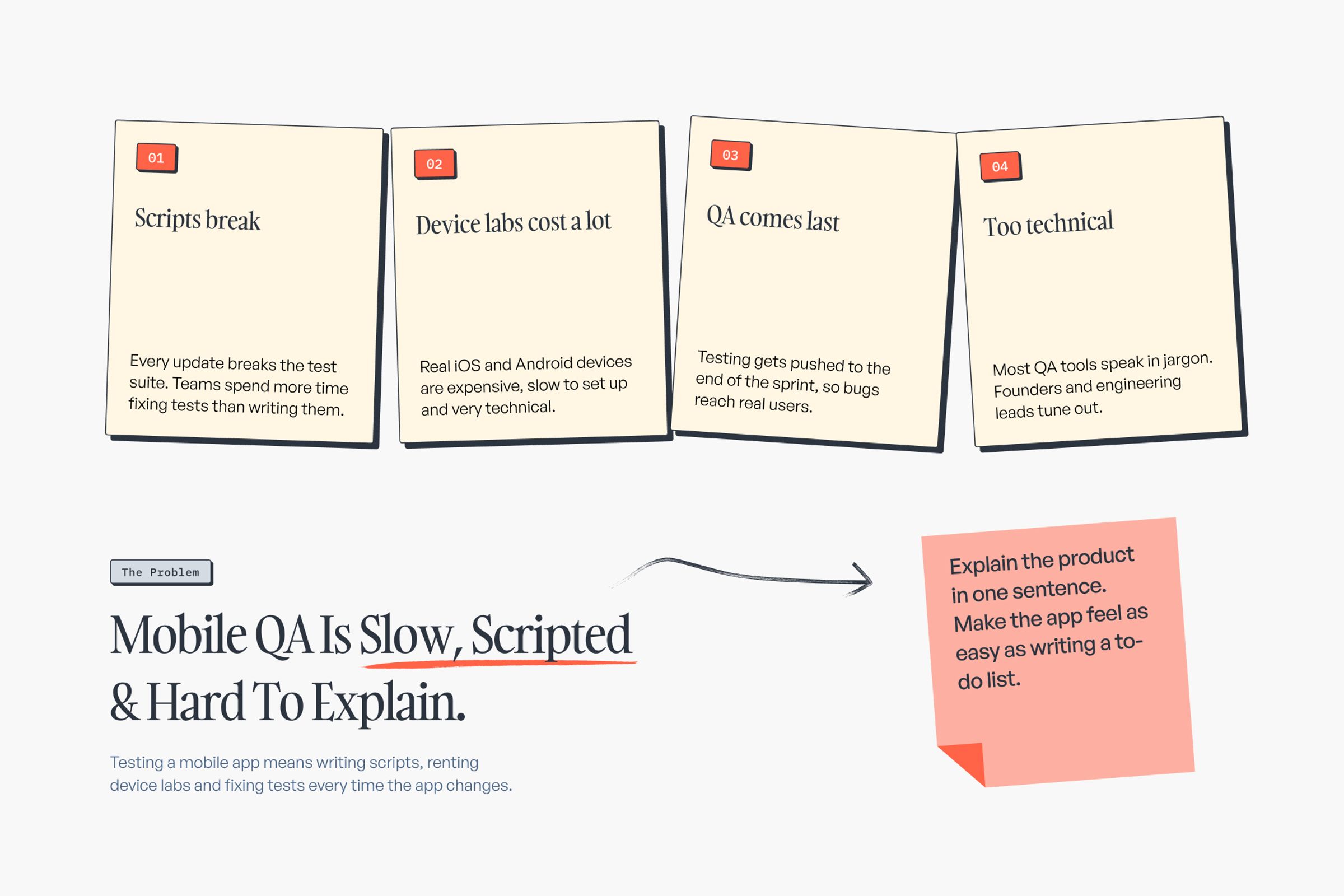
Mobile testing is slow, scripted and hard to explain.
What gets in the way: scripts break on every update, device labs cost a lot, and most testing tools speak in jargon.
Teams spend more time fixing tests than writing them, so bugs reach real users. The people who buy these tools, founders and engineering leads, stop reading at the first technical term. The goal: explain the product in one sentence, and make the app feel as easy as writing a to-do list.
Brand
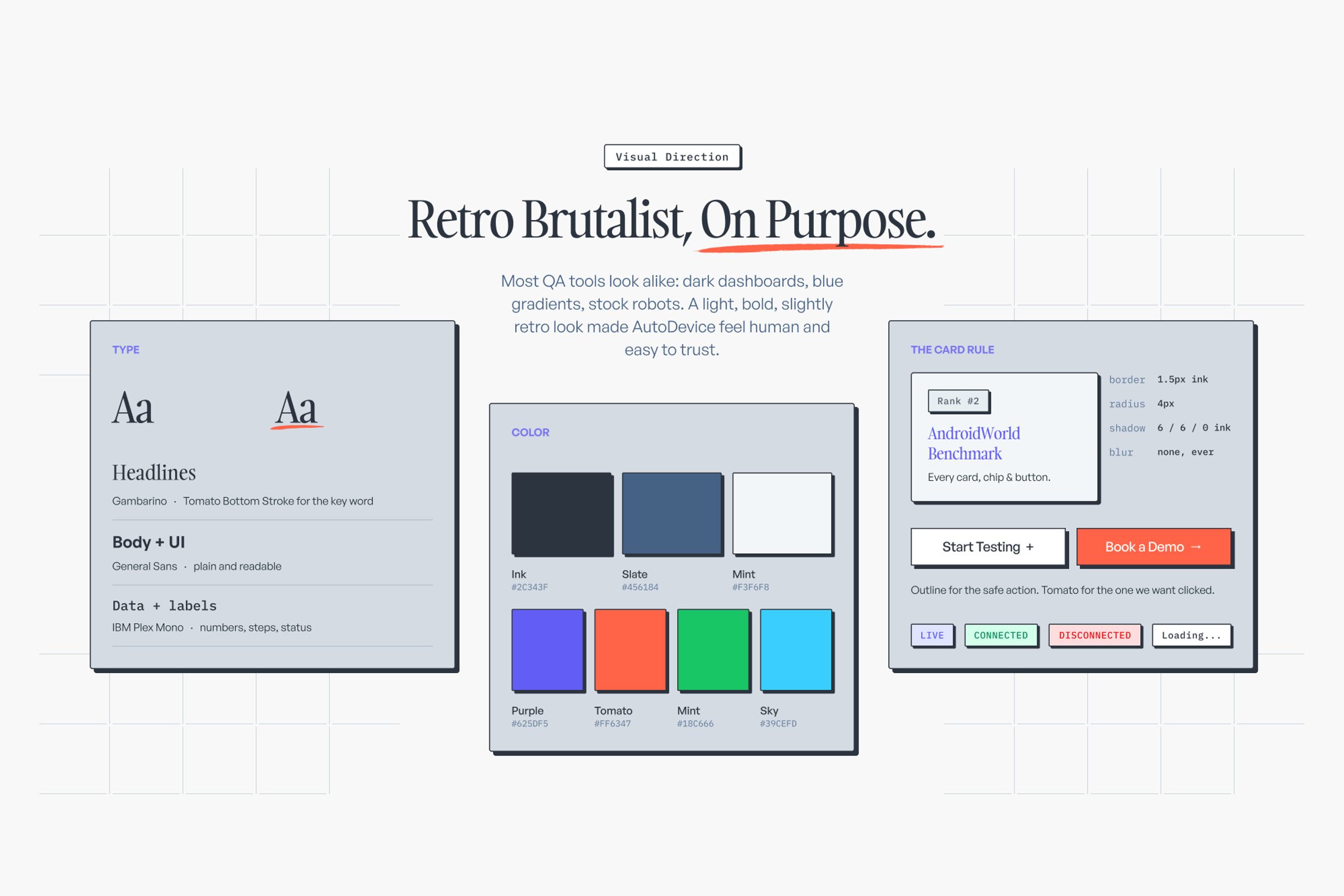
Retro brutalist, on purpose.
Why: most testing tools look the same, with dark dashboards and blue gradients. A light, bold, slightly retro look made AutoDevice feel human and easy to trust.
Serif headlines with a tomato stroke under the key word, a plain sans-serif font for the interface, and a mono font for numbers and status. Every card, chip and button follows one rule: a 1.5px ink border, 4px corners and a hard shadow with no blur. Tomato marks the one button we want people to click.
Website & writing
Simple design, simple words.
The rule: a founder should get every line in one read, and an engineer should still trust it.
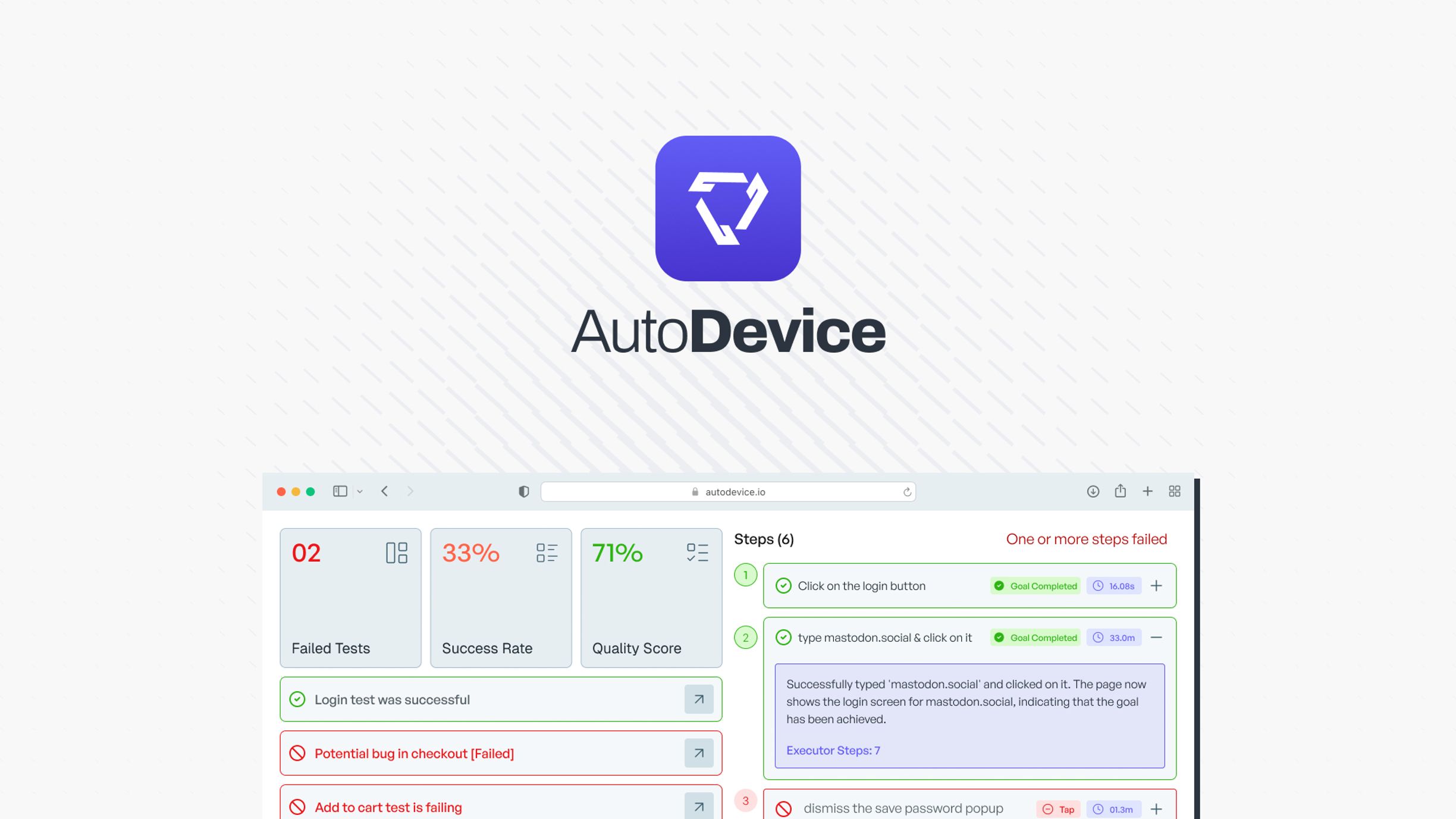
Small text: The headline has seven words and says what the product does. Real app screens sit under it instead of illustrations, and the AndroidWorld #2 rank sits above it as proof. "Scriptless autonomous test orchestration" became "Turn plain English into automated iOS and Android tests." Once the words got simpler, the screens got simpler too.
Core flow
Write plain English and watch it run.
Four steps: add your app, write the steps, watch it run, get the result.
Upload an iOS or Android build and AutoDevice opens it on a device. Type what a user would do, with no code. The phone shows live next to the steps, and each step turns green or red. At the end you get a pass rate, a quality score and the failed steps, ready to share.
Built on shadcn/ui
75+ screens built on shadcn/ui, a free open-source component library, so we could launch fast.
Why it worked: the developers got components that already work in code, and I didn't redraw buttons, tables, forms and menus from scratch.
I styled shadcn/ui to the AutoDevice brand, and my Figma components matched the code one to one, so handoff was simple. Light and dark themes came built in. My time went into what makes AutoDevice different: the live test session, step results, and every connected, disconnected, empty and error state.
Launch kit
One look, everywhere.
The same type, colors and hard shadows carry from the site into onboarding emails, X and LinkedIn covers and blog covers, so people recognize AutoDevice at a glance.
Impact
A technical product that feels human.
What shipped: a brand, a live website, a 75+ screen web app on shadcn/ui and a full launch kit, all sharing one look. AutoDevice ranks #2 on the AndroidWorld benchmark.
What I learned: show the product, not a robot. Plain words made the interface simpler. Building on open-source parts let me spend my time on what made the product different. Next, I'd track how many visitors start a test after landing on the homepage.
More Projects
Other work across fintech, Web3 and SaaS products.
View Projects